Região Sudeste (in red/vermelho)

Rio de Janeiro (Horacio)
Rio was built partly on blood: the
bloody battles between the Portuguese and French, led by a young military
captain Estácio de Sá, nephew of the governor of Brazil, fought the French and
finally secured the sight for Portuguese colonization, although the pace was
slow; the cidadela (the fortress to
protect the city) was not begun until 1568.
On a larger scale, it is important to
understand why the largest and richest of the countries of South America speaks
Portuguese, rather than Spanish, as does the remainder of the Hemisphere. The
Treaty of Tordesillas (1494) effectively, although accidentally, created
Brazil; the treaty was an agreement sponsored by Pope Alexander VI dividing
newly discovered lands in the Western Hemisphere between Spain and Portugal.
The Pope drew a line north to south half-way between the Cape Verde Islands
(owned by Portugal) and the newly-discovered islands adjacent to Hispaniola
reached by Columbus, giving everything east of that line to Portugal and
everything west of the line to Spain.
Brazil grew and expanded over time from
that date, and today Rio de Janeiro is the sixth largest city in the Americas
and the fourth richest (in GDP) in Latin America. Gaining independence from
Portugal in 1889, Brazil is the largest (land area) country in South America.
Rio, originally the capital of Brazil, now has over 7 and a half million
people, and is home to a multitude of economic activities, including
manufacturing, heavy industry, mining, electronics, ship construction, oil and
gas exploration and refining, and banking and finance. Travel and tourism are
extremely popular in the city, a main hub of culture and entertainment in South
America.
Visitors to Rio generally come for its
world-famous beaches (Copacabana; Ipanema; Barra da Tijuca; Prainha; Praia
Vermelha; Arpooador; and the official nude beach, Abricó) and are rewarded
handsomely: the city has more than 50 miles of beach.

Although you could spend your entire vacation on the beach, in addition there are numerous other attractions. Perhaps the most famous is Corcovado Mountain, with the statue “Cristo Redentor” on top; a tram carries visitors to the top. Two more famous mountains within the city are Pão de Açucar and Pedra da Gávea.

Additionally, travelers enjoy the
botanical gardens (jardim botânico) as well as the colorful bairros, the “favelas” (below), and the near-by rain forest, “Tijuca”.

Cultural attractions in Rio include
of course the world-famous “Carnaval” which is the Brazilian version of New
Orleans’ “Mardi Gras”; the celebration is a colorful and exuberant lead-in to
the fasting required during Lent.

Brazil is greatly blessed as a
food-basket: Brazil is the world’s largest producer and
exporter of coffee and
orange juice. In addition, Brazil produces sugar cane, cocoa, cotton,
bananas,
wheat, rice, and soy. Popular foods served in the city include “frango
com quiabo” (chicken
with okra); “queijo” (cheese of course); “feijão” (beans, either black or brown); “banana
frita” (fried bananas); and “farofa”
(lightly toasted manioc flour). “Feijoada”
is the most popular national dish- a black bean stew with rice and pork.
Portuguese-style sausage “linguiça” is
of course a national favorite as well.
Meal times vary across the country but in Rio, breakfast is commonly fruits, like oranges and papaya,
with tapioca or couscous and always coffee. Grilled ham and cheese sandwiches,
bread and butter or jam, may also be served. Lunch is the heaviest meal of the
day across Brazil, but in a busy cosmopolitan city like Rio, lunch is usually a
quick meal of rice, beans, or salad. Street foods are very popular, especially “pastéis”, a Brazilian adaptation of
Chinese wontons: a deep-fried thin pasta with a savory filling of meat or
cheese, which may also have sweet fillings of fruit such as pineapple. Three
dishes which are loved in Rio and served in the evening meal time are “Bobó de Camarão" (1)(shrimp in manioc and coconut milk
purée); “Carne Seca com abóbora” (jerked beef with pumpkin purée and
rice); and “Moqueca” (2) (shrimp or fish stew with coconut milk and rice).


The music of Brazil is a major part of
the culture of this vibrant city: although most Americans think only of samba
or bossa nova when they think of Brazilian music, the musical roots include
African, native, and European traditions and forms. Samba is best known as a
musical form attached to Carnaval, attributed to composers such as João
Gilberto and Dorival Caymmi, while bossa nova became popular since the 1950’s
under composers such as Antônio Carlos Jobim.
Indigenous and folk musical forms have found a growing audience across
Brazil, and especially at sports events, performers are widely received in the
city. The “choro” is a unique
Brazilian musical form: literally “lament”, it is a semi-religious musical form
that was formulated in the late 19th century; the first phonograph
recordings in Brazil were “choros”.
visitors or to business people or researchers; there is never a moment when you can be bored when experiencing Rio!
References
São Paulo (José C.)
São Paulo is the richest and most
populous state in Brazil and its capital city, bearing the same name, is the
largest city in all of South America. São Paulo city is home to 18 million
people and is the third largest city in the world, after Tokyo and New York. More
people of Japanese descent live in São Paulo than in any other city outside of
Japan. São Paulo is one of the country’s and, indeed, the
continent’s most significant areas. In fact, it contributes over a third of
Brazil’s GDP (Gross Domestic Product).

São Paulo enjoys a tropical to
subtropical climate, depending on the altitude. It is generally warm and mild
all year round, with some areas experiencing chilly night-time lows. The three
most significant cities in São Paulo are São Paulo, Guarulhos and Campinas.
The state also hosts several large events such as the São Paulo International Art Biennial, the international Film Festival, São Paulo Fashion Week, the Virada Cultural – one of the biggest cultural events in the world with 1300 presentations for 24 uninterrupted hours – and the biggest LGBT parade in the world. Sao Paulo also staged the world’s biggest football event: 2014 FIFA World Cup.
Food
Another São Paulo attraction is gastronomy, with 15,000 restaurants, 20,000 bars and 3,000 coffee shop-bakeries. São Paulo is renowned for its pizza, which is served in more than 5,000 stablishments. Altogether, São Paulo offers almost 100,000 restaurants and other food and beverage services.
The city
of São Paulo is also home to the second largest public library in the country,
the Mario de Andrade Library,
which was founded in 1925 and which has a collection of over three million
items.The São
Paulo Museum of Art and the São Paulo State Pinacoteca are among the
best art museums in Latin America.


References
Minas Gerais (Sarah)
Minas Gerais is located in the southeast of Brazil and is home to 20 million habitants making it the second most populated state. Interestingly it is the fourth largest state in the country and is named after its abundance of minerals. The population is full of European, Portuguese, and African origins all of which make the state unique and diverse. Religious and historical colonial influences are evident in the culture and architecture of Minas Gerais. In fact, Roman Catholicism is the most prevalent religion that is practiced by many habitants. Aside from the state's wealth of minerals, it is also the country's leading producer of rice, beans, corn, coffee and cheese.

Cuisine
Minas Gerais is know for its diverse and exquisite cuisine in fact some recognize it as the culinary capital of Brazil. The cuisine ranges from distinct types of cheeses to an assortment of traditional meat dishes. Some of these cheeses include queijo minas, requeijao and catupiry. Pão de queijo is a popular dish known as “brazilian cheese bread”. A traditional dish from this part of Brazil, known as Feijao tropeiro, is made with beans, sausage, bacon, collard greens, eggs and manioc flour. Additionally, Carne de sol com mandioca is a dish made with salted cured beef and manioca, a potato like legume which is similar to yucca and cassava. Another popular dish of Minas Gerais is known as péla mare which is crushed corn and pork.
Minas Gerais is know for its diverse and exquisite cuisine in fact some recognize it as the culinary capital of Brazil. The cuisine ranges from distinct types of cheeses to an assortment of traditional meat dishes. Some of these cheeses include queijo minas, requeijao and catupiry. Pão de queijo is a popular dish known as “brazilian cheese bread”. A traditional dish from this part of Brazil, known as Feijao tropeiro, is made with beans, sausage, bacon, collard greens, eggs and manioc flour. Additionally, Carne de sol com mandioca is a dish made with salted cured beef and manioca, a potato like legume which is similar to yucca and cassava. Another popular dish of Minas Gerais is known as péla mare which is crushed corn and pork.
Music
Brazilian music contains a variety of different sounds that come from very important historical influences, particularly the African culture. A popular music style that is known throughout the country but is more prevalent in Minas Gerais is known as Sertanejo. This style of music dates back to the 1920’s, originating from festival and religious celebrations. Sertanejo shares many similarities to Iberian folk songs however advancements in technology have modernized this style of music.
Economy
As the state’s name suggests, Minas Gerais is known for the minerals it possesses that are found in the state's abundant mines. Additionally, it is the largest producer of coffee and dairy products. The state generates close to 10% of Brazilian GNP in addition to 13% of Brazil’s exports, making it an important component in the country's economy.

Main cities
A few of the largest and most well known cities of Mines Gerais include Juiz de Fora, Belo Horizonte and Ouro Preto. In particular Juiz de Fora is known for its important steel mills and automotive factories and is ranked as being the third most important industrial center of the state. On the other hand Belo Horizonte is known for having numerous mines and livestock. Belo Horizonte sits in the middle of the Curral del Rey mountains and is home to the Federal University of Minas Gerais and the Catholic University of Minas Gerais. The city Ouro Preto was founded in 1698 as one of the greatest center for gold mining. After Brazil’s independence from Portugal, the city became the capital of Minas Gerais however this later changed due to transportation difficulties and resulted in Belo Horizonte becoming the official state capital.
References
Britannica, The Editors of Encyclopaedia. “Ouro Prêto.” Encyclopædia Britannica, Encyclopædia Britannica, Inc., 16 Aug. 2012, www.britannica.com/place/Ouro-Preto.
Brown, Sarah. “A Music Lover's Guide to Brazilian Pop.” Culture Trip, 2 Sept. 2016, theculturetrip.com/south-america/brazil/articles/a-music-lovers-guide-to-brazilian-music/.
Meyer, Amelia. “Brazil.org.za.” Portuguese Colonisation Of Brazil, 1 Jan. 1970, www.brazil.org.za/minas-gerais.html
“Minas Gerais - Economy and Infrastructure.” Rules of Beach Soccer in Brazil, www.v- brazil.com/information/geography/minas-gerais/economy.html.
“Minas Gerais Food: The Richness of the Jequitinhonha Valley.” Vivejar, 16 Aug. 2017, vivejar.com.br/en/minas-gerais-food/
“Sertanejo.” Great Brazilian Music - Samba, www.greatbrazilianmusic.com/sertanejo.html.
Espírito Santo (Wilson)
Espírito Santo is one of the fastest growing states in Brazil because of its strategic location on the coast of Brazil. Espírito Santo's location encourages new and investments for all markets, international and domestic. Espírito Santo is Brazil's ports and its capital Vitória has the highest Gross Domestic Product (GDP). Espírito Santo also has a huge tourism industry and tourists can choose different routes throughout the country. These routes include: Sun and Moqueca Route, Coast and Immigration Route, Marble and Granite Route, and Caparaó Route.These routes include things from agricultural tourism to adventure, from beaches to historical routes of German and Italian immigrants. Espírito Santo has tons of beaches and coastlines for tourists to enjoy. They even have black sand beaches. Other than beaches Espírito Santo also has mountains as you move inland. Tourists attractions in Espírito Santo include Jacaraípe and Manguinhos, Domingos Martins (mountains) and Guarapari (black sand beaches).
 |
| Parque Estadual de Pedra Azul |
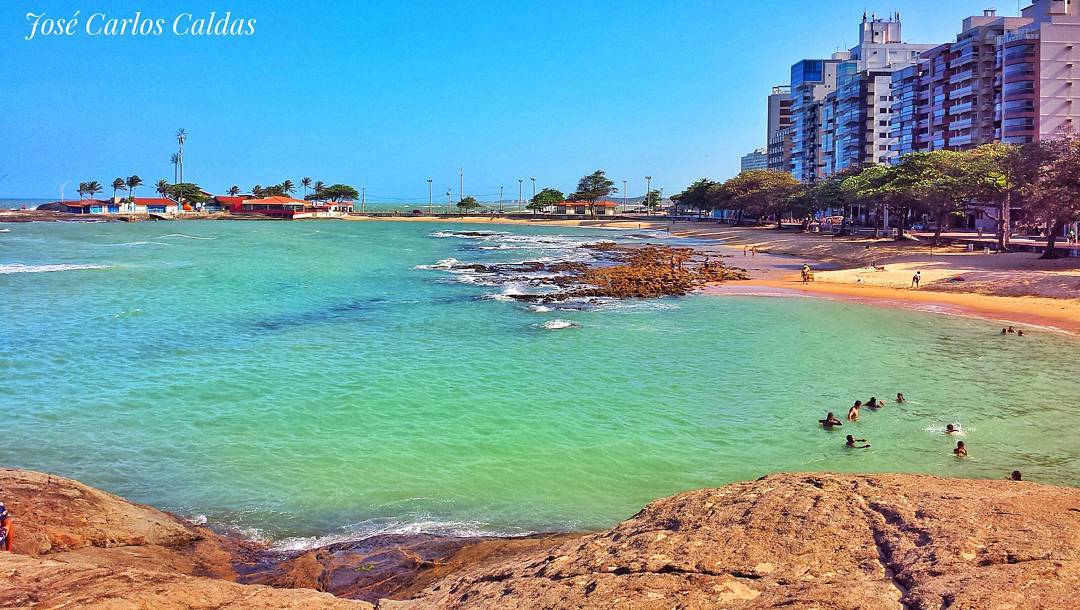 |
| Guarapari |
The food in the region has cultural influences from Europe, India, and Africa. Dishes that have these cultural influences and heritage are the Torta Capixaba (Seafood Salt Cake) and Moqueca Capixaba (Fish Stew).
Vitória is the capital city of Espírito Santo. The city was founded in 1551 and is the 3rd oldest capital in Brazil. Vitória has approximately 315,000 inhabitants which is comparable to St. Louis. Vitória includes the mainland area as well as 34 islands off the coast. Many of Vitórias neighborhoods are surrounded by parks and natural tourists attractions. Since Vitória is on the coast and includes the 34 islands there are plenty of activities to do. These include whale watching, the sea turtle conservation center, windsurfing, museums, boat tour, and city parks.
The beautiful beaches and mountains are waiting for you in Espírito Santo.
This comment has been removed by the author.
ReplyDeleteThis comment has been removed by the author.
ReplyDeleteHoracio, you are a really good writer! I enjoyed reading that a lot, so thank you :) Also thanks for introducing me to some of my new favorite music. That choro is amazingly catchy.
ReplyDeleteJosé, I've actually eaten the pizza in São Paulo (I got to travel to Brazil back in high school). I remember being really surprised because I'd never had pizza in that style before. White sauce with surprising toppings like corn and artichokes.
ReplyDeleteHoracio, I really enjoy the information you shared. But what really caught my eye was discovering that Rio de Janeiro is the largest exporter of orange juice, that's really fascinating. I've always wanted to go visit Cristo Redentor, that picture looks amazing. Thank you for sharing. I really enjoyed it.
ReplyDeleteWilson, thank you for sharing this information about Espiritu Santo. I didn't know they had black sand beaches located in Guarapari. I didn't know Espiritu Santo had so many mountains, a great place for an outdoor vacation. I enjoyed reading about their food influences, and how they come from Europe, India and Africa. Again, thanks for sharing.
ReplyDeleteJose C. , it is very interesting that São Paulo is home to more Japanese people than any other city outside of Japan. I always knew about large Japanese populations in South America, particularly in Peru, but I never knew São Paulo has the largest. Understanding this, it now makes more sense that Brazil developed their own style of jujitsu. I have a friend in São Paulo, and reading your blog post made me want to go and visit her. Thank you for sharing the information.
ReplyDeleteHello Horacio, I want to thank you for such a detailed post about Rio de Janeiro. I liked reading about the history, the food, and of course, the music. I especially loved the video of Choro Pesado. I now have a new type of music that I enjoy. I sometimes go and try different Brazilian restaurants in my area, so I got hungry reading about feijoada and queijo. I am yet to taste frango com quiabo, so I am looking forward to this. Thank you.
ReplyDeleteOi Horacio! This was so well written and I loved all of the pictures. All of the Brazilian food that I've had is delicious, although I haven't tried the foods that you've listed here. I love food so Rio seems like a great place for me to travel and fill my belly. Learning about the history behind this region was really interesting! Obrigada.
ReplyDeleteBoa tarde Sarah! The food looks so good and the music is beautiful! It would be incredible to visit and experience them both first hand. Nice job!
ReplyDeleteOi Jose. Before reading your post I had the misconception about the largest in Brazil. I always thought that it would be Rio de Janeiro instead. I can now see why such a large number of events are held here. It would be a great place in which to travel. I find it hard to believe in the number of restaurants that reside here. There must be multiple restaurants on every street corner! Thanks for sharing!
ReplyDeleteOi Sarah. I haven't heard of Minas Gerais before but I am glad that I read your post. I found it quite interesting to learn about the diversity. Cuisine is one of my favorite topics and I enjoyed this section. I would definitely like to visit the amazing eateries described. The Brazilian cheese bread sounds wonderful and I need to learn how to make it. Thanks for sharing!
ReplyDeleteHi Erik,
Deleteif you have Costco in your area they sell "pão de queijo" (cheese bread) frozen. It is really good! I'm not sure if all Costco have them, you should check it.
Oi Sarah,
ReplyDeleteThis was the first time I heard of Minas Gerais. Thanks for sharing information from this part of the country. I didn't know that in their cuisine they were interested in cheese as much as we do here in California. I I would love to visit because of its mines and the cheese bread of course.
Jose C,
ReplyDeleteI always wanted to visit Sao Paolo since I have few friends that I worked with in Mexico that were from that area. It seems that is a beautiful place, and it seems that has a lot to see from its cultural point of view. When it comes to their food I would love to try some Churrasco and Feijoada.
Sarah, I enjoyed learning about Minas Gerais from your post. You presented a lot of great information but one of the things that caught my attention was the fact that the area was a mining place for GOLD! I imagine Ouro Preto being a crazy gold rush like in San Francisco. Also, a few things about their economy reminded me of my home state: Wisconsin. Both places are famous for their dairy industry, cheese production and corn. If I visited Minas Gerais I would probably feel right at home. I also gathered from the video that it is a very safe place to be, and I certainly would consider traveling there. The Sertaneja Brazilian Folk Song in the video reminded me a little bit of Spanish Flamenco, which is to no surprise since it has its roots from the Iberian Peninsula. I really enjoyed the guitars and the rhythm. The food looked great as well, however I think I’d pass on the rabbit cooked in its own blood! If I washed it down with a delicious cup of Brazilian coffee, maybe it wouldn’t be so bad. Thank you for sharing about Minas Gerais. Bom trabalho!
ReplyDeleteI'm from Minas. I've never heard of the rabbit , but we have chicken with blood sauce and it is delicious! One of my favorite dishes along with frango com quiabo (chicken with okra).
DeleteWilson, great post about Espiritu Santo. I was intrigued by the black beaches and the fact that some of the sands are quite radioactive. I had never seen or heard anything like that before. I didn’t know much about the landscapes of Brazil and I had previously thought of it as being one large jungle. Little did I know the area was filled with so much beauty from its coastlines, the mountains and interesting architecture. It was also interesting to learn that there is such a mixture of people from different backgrounds in Espiritu Santo, such as the Swiss, the Poles, Italians, and more. It surprised me to see people doing traditional German folk dances in the video. The economy is quite impressive as well and I am curious to know more about the economic and political impact around the world from their petroleum and natural gas products. Papaya and coconut sounds great for breakfast; I’m there! Thank you for posting about this fascinating state.
ReplyDeleteIf you buy little papayas at Costco, you will see on the label that they are from Espírito Santo.
DeleteOi Sara! Great presentation with a lot of detailed information. Minas Gerais looks like a great city that very advanced and I would one day want to visit. With the state having 20 million inhabitants it is close to the number of people in Texas. I googled "Feijao tropeiro" and it looks like a pretty tasty dish that I would try. Overall this was a great presentation about a Minas Gerais.
ReplyDeleteRio de Janeiro (Horacio)
ReplyDeleteHoracio, well done! You are an excellent writer, this could have been for a travel book. My favorite part of your blog was learning about all of the amazing local cuisine that Rio de Janeiro has to offer! The Bobó de Camarão in particular sounds just fantastic! Good local cuisine is always a highlight for me when I travel, so I'll be on the lookout for this dish when I eventually get to Rio de Janeiro! Thank you!
bobó de camarão e moqueca de peixe are to die for!
DeleteEspírito Santo (Wilson)
ReplyDeleteGreat job on your blog Wilson! I'll be honest, I haven't spent much time learning about Espírito Santo, so your blog post was extra interesting to me as it was all new information! I really liked hearing about how diverse that area is, they have beautiful beaches (including black sand beaches?!?) and mountains? That sounds like an amazing place to visit! Thank you Wilson.
Horacio,
ReplyDeleteWow. Nicely done! In addition to the food… they have acai, which is the most amazing thing of my life. It’s like a smoothie, but I have never found it anything close to it anywhere else and they just called it acai. When I went to visit my sister, we had it like every day and then I would crave it when I got home. The crime rate in Rio is also insanely high. My sister worked at an orphanage outside of Rio for a couple of years and she would have to go in to Rio to get kids or to advertise the orphanage. She has traveled many places and seen many things, but she said she would never be caught in Rio after dusk. It just is not smart.
That's the truth, unfortunately. Any big city after dark in Brazil is not safe... Rio, São Paulo, Belo Horizonte, Recife, Fortaleza... South of Brazil is safer.
DeleteSarah,
ReplyDeleteHow fun! I didn’t know Minas Gerais was known as Brazil’s culinary capital. Probably the most Brazilian associated drink is the caipirinha and I just looked up Minas and apparently all of the good cachaça, which makes the drink, is found in Minas. Who knew!
Oi, Sarah! Thank you for your post about Minas Gerais, Brazil. The first time I learned about this state was on an episode of Anthony Bourdain's 'Parts Unknown'. The episode called "Minas Gerais" not only talks about Miniera food, but also about the Brazilians who are of African ancestry and their contribution to Brazilian culture. If you haven't seen it, you should check it out. It's on Netflix. Obrigada!
ReplyDeleteOi, José! Thank you for your post about São Paulo, Brazil. I was not aware that Brazil has the largest number of Japanese descendants outside of Japan. I am a Peruvian with Japanese ancestry. After reading your post, I wanted to find out about Peru's Japanese population. According to Wikipedia, Perú has the second largest population of Japanese people in Latin America after Brazil. Obrigada!
ReplyDeleteOi, Horacio! Thank you for your post. Very interesting to learn some history of Rio de Janeiro. Loved all the information you provided. I found it amazing to know that Brazil is the largest orange juice provider. I love my OJ. Loved your pictures and videos you posted. Would love to go there sometime during Carnaval and visit Cristo Redentor.
ReplyDeleteOi, Jose! Thank you for all the information. Very interesting facts. I never imagined that São Paulo was on the top three biggest cities in the world. I always thought that Distrito Federal de Mexico was among them. Also, never thought that there were so many Japanese residents in Brazil.
ReplyDeleteThis comment has been removed by the author.
ReplyDeleteHoracio,
ReplyDeleteThank you for the Information on Rio de Janiero. You wrote very well, and i enjoyed reading your presentation. it had my attention the entire read. We as traveling Americans think we know a lot about Rio based on what we see on TV, but in Reality there is so much more. Growing up in California, I have been around my share of Beaches. and Suprisingly some Beaches reminded me of Our Famous Venice Beach out here only a little safer and Cleaner. Other beaches reminded me of what you would see in Miami. I found it interesting that a lot of their dishes contain Coconut Milk or some kind of Coconut.
JOSE C.
ReplyDeleteThey say you learn something everyday. Today, thanks to you, i learned that São Paulo is the Largest city in all of south America. I would of thought it was Rio or even Buenos Aries in Argentina. The fact that it is the 3rd largest city in the world behind Tokyo and New york blew my mind as well as the amount of Japanese decendent's that live there outside of japan itself . One of My favorite Foods is Japanese so I can Appreciate that fact you mentioned. I am gonna be a little bias though, and wonder why Los Angeles isnt on the top list of being one of the largest Cities. Haha! São Paulo's City High Rises reminded me of New York , but with a little bit of L.A Smog.
I enjoyed very much learning about a professora's home state in our very first regional blog posting. I also have enjoyed very much all of the videos included. Thank you all for your hard work and thoroughness!
ReplyDeleteI am making a list of all of the different beaches and attractions that I must see when I visit Brazil some day. And I enjoy learning about Brazilian cuisine. Obrigada tudos!
ReplyDeleteSarah, thanks for sharing all that information about Brazilian cuisine. I had never heard of Minas Gerais, sounds like they have some incredible food, I especially want to try the Pão de queijo. Obrigado.
ReplyDeleteThank you all for your presentations. As I read about São Paulo in the homework I started to wonder what the difference was between São Paulo and Rio de Janeiro since I knew they were both in the same general area. Your presentation gave me a very nice side by side and saved me from having to do the research myself. If I were to choose one, I think I'd really like to visit São Paulo. It looks like such a beautiful city. Thanks
ReplyDeleteSão Paulo is New York, Rio is L.A.
DeleteSarah, thanks for introducing me to Minas Gerais! It seems like a great place to go and appreciate the culture and food without as many tourists. The first video that you posted made me interested in visiting all the beautiful churches!
ReplyDeleteWilson I loved all the beautiful scenery pictures you posted of Espirito Santo! It looks like a beautiful vacation spot to go and see the landscape. I hadn't heard of it before, but now it's on my list of places to go!
ReplyDeleteOi Horacio, great presentation. So much information but very well done. I did not know the history of Brazil or when it gained its independence. Explaining how the pope was primarily responsible for dividing the land between Portugal and Spain was very interesting. I thought the country was acquired similar to how many countries were acquired, by war. I always wondered why it was the only South American country whose dominant language was not Spanish. Thank you for this information. Also, your explanation of how Carnival and Mardi Gras are similar really helped me understand. I initially thought they were not connected and were just two separate celebrations.
ReplyDeleteGreat presentation.